Monday, April 24, 2017

Youth participation beyond tokenism


Youth Empowerment and Youth Development have joined the family of buzz phrases that are constantly being used by governments, non-governmental organisations and the private sector in various ways. Like girls and women empowerment, everyone wants to take part in this new hype, and use it to position their organisations or products. Corporate Social Responsibility(CSR) initiatives are also been aligned to the youth development agenda, which is a good.

But to what extent is youth participation seen in the initiatives developed by the government, non-governmental organisations and private sector?

Malawi has seen its fair share of youth development events, where the youth come as an afterthought. That is, the youth are invited to the event after everything else has been set already. Then, we realise that we are missing a major component, the youth themselves. Of course, this is compensated by the phrases ‘youth at heart’ and ‘youthful.’ Just a reminder, the national youth policy defines a young person as someone who is between the ages of 10 and 35. It is estimated that over 60 percent of the Malawi population is below 35 years. In an ideal situation, you would expect this segment of the population to get a lion’s share in decision making or participation on issues that directly affect them.

Recently, Standard Bank in partnership with UNICEF and the Ministry of Labour, Youth and Man Power Development organised a Malawi Socio-Economic Forum that focused on Youth Entrepreneurship. This programme was supposed to be by the youth and for the youth. Just by taking a glance at the programme, you realise that the youth are missing in this program. Of the 9 speakers that were lined up to present, only 1 person was in the category of youth. It doesn’t take a genius to realise that the contributions of this one young people will be overshadowed.

The rest of the youth that were privileged to walk into this invited space, did not event get a chance to participate in the discussions that took place. Was this event for the youth? or was this event organised for another purpose and the youth just happened to be invited or co-opted? This is just one example of ‘youth events’ that does not really involve the youth.

Events that are organised to speak to the youth, and not let the youth speak and the rest of us listen.

Equally, there are many initiatives that young people are organising to empower fellow youths and contribute to the economic development. Efforts are made to seek support from the government, non-governmental organisations and the private sector which is hard to come by. Without their support, endorsement or recognition of their efforts, the outcome of these initiatives is neither regarded nor considered in their decision making.

To move away from youth participation as tokenism, the government, non-governmental organisations and the private sector, need to involve the youth right from inception level. The agenda of a youth meeting/forums must be set for, and by the youth. This way, you will have a relevant discussion with the youth. Even if you want to financially invest in the youth, you will invest in areas that the youth are interest in. The youth might be inexperienced and not as wise, but they know what they want, and where they are going.

Selection of speakers also needs to go through the same young people. You will be surprised that the panel that you might form and the one that the youth will form will be totally different. You will be even surprised with the list of mentors or people who motivate them that they might share. Without having the youth, you will have a list of speakers that the youth will not relate with, which is a waste of time and resources for the youth and the organisers.

Most of all, the stakeholders need to move beyond funding youth forums, they need to start funding the implementation of the resolutions made. You have stakeholders who are willing to spend over 10 Million Kwacha to have a youth forum but run away from supporting an initiative that will cost less than 1 million. Again, this goes back to the mismatch between the youth priorities and those of the stakeholders.

This post was written by Chimwemwe John Paul Manyozo a Chevening Alumni and Associate Fellow of the Royal Commonwealth Society

and Vincent Kumwenda the CEO of mHub. Vincent is writing in his personal capacity. The post was also published on http://hubdev.blogspot.com/2017/04/youth-participation-beyond-tokenism.html

Saturday, April 16, 2016

MARK ZUCKERBERG ADORES 10 YEAR OLD MALAWIAN; PANASHE JERE; A PRODUCT OF MALAWI’S TECH REVOLUTION.


Imagine getting a chance to meet Mark Zuckerberg, CEO and owner of Facebook, WhatsApp, Instagram and Messenger. A man sitting at the helm of conversations between and about over 1.5 billion people. Mark is one of the top 6 richest men in the United States of America. Imagine that He further adores you and even posts about you on his Facebook page.

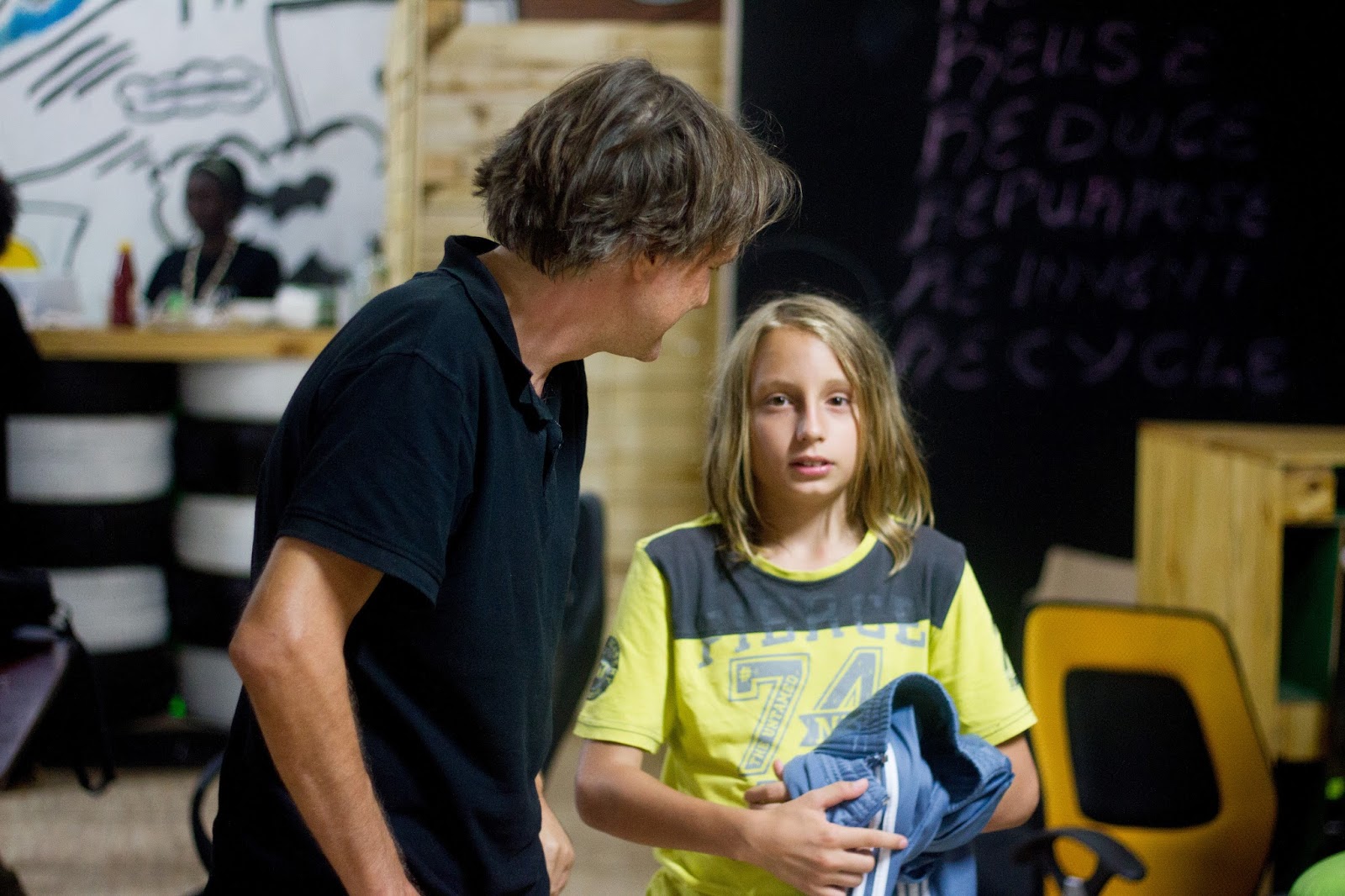
Well, this is no longer an imagination or a dream for 10 year old Panashe Jere from Area 49 in Lilongwe, Malawi. It is reality. Panashe met Mark Zuckerberg at Facebook Headquarters, Menlo Park in California. Zuckerberg later posted on his Facebook page; a photo of him talking with Panashe captioned “This guy started coding earlier than I did.” Mark seemed to acknowledge that Panashe has started doing wonders in computer programming at a much early age than He, Zuckerberg. Panashe met Mark alongside the grand F8 conference organised by Facebook that brought together thousands of developers from across the world. Panashe got a ticket to travel from Lilongwe, Malawi to the Silicon Valley after winning a coding competition supported by Malawi’s mobile network operator TNM through its TNM Smart Challenge Competition. TNM sponsored coding workshops, prizes in the form of smart phones for all finalists and a trip to the Silicon Valley for all winners. The winners visit Facebook, Google and Stanford University among other high tech institutions.

Panashe developed a mobile application that allows children to input text and then converts it to voice so children always have someone to talk to; as he describes it.
It wasn’t just Panashe who got to shine at the F8 conference; three other young Malawians; Daniel Mvalo, Thandie Magasa and Walter Moyo were at it as they got recognition from Mark Zuckerberg and Facebook Chief Operations Officer; Sheryl Sandberg. The three developed a mobile application called Maternitech. The mobile application provides information on maternal health and family planning.

But, where is this technology revolution in Malawi starting from? The place is called mHub. It is Malawi’s first technology hub. The hub runs a Children’s Coding Club, where Panashe had his first and eight other lessons on how to develop computer programs that could even run on the cell phone and do amazing things like converting text into voice. The club has so far trained over 30 children aged between 8 and 16. The hub also runs the Girls coding club where girls are taught basics of computer science and how to develop technology applications. The tools that these children and girls are taught on include high tech platforms such as Scratch and Google’s MIT App Inventor. Scratch is a special developing platform developed by MIT and Google to teach Children block programming using drag and drop.


The hub also trains young entrepreneurs on basics of entrepreneurship. And serves as an incubator and co working space for emerging technology start-ups.

mHub was founded by a young female technology enthusiast; Rachel Sibande. Hers is a story of focus and determination against the odds. She is a Google Award Winner and has been recently named one of Africa’s Next Einstein’s by the Next Einstein’s Fellows Initiative.

It appears that Malawi is right on to a good start on this global technology revolution. Earlier in the year; President Obama launched the multibillion Computer Science for all program in the USA. Through the initiative; American Children will also start to learn basics of computer Science early on in school intimating the fundamental need for incorporating computer science as a cross cutting subject.

It is inevitable that technology is fast becoming a key stimulant and enabler for economic growth and development. Careers in technology are becoming more lucrative. And Malawi seems to be taking good steps so far if these success stories are anything to go by. However, the need for private sector entities such as TNM; mHub, Government and the Academia to enhance sustainability of such phenomenal talent is absolutely necessary and can only be emphasised.


Sunday, March 13, 2016

TEDxLilongwe Speaker nominations are open

TEDxLilongwe is calling for interested people to apply or nominate a speaker for this year's TEDxLilongwe event which will take place on 21st May 2016 at CrossRoads Hotel.

Below is the original message posted on TEDxLilongwe Facebook page:


Hallo TEDxLilongwe fans! Now calling for nominations for ‪#‎TEDxLilongwe‬

The team is in full swing working, planning and coordinating. A lot is happening behind the scenes, towards the next #TEDxLilongwe 2016 event slated for May 21. It is going to be great!
Do you know someone with an interesting story/idea that could inspire via the TEDx stage? Please forward the name of nominee, contacts & brief summary of the person to louisparkinson@gmail.com

1. Name of nominated person (you can nominate yourself)
2. Contact details of nominee (email address and phone number)
3. Brief summary of why the person is being nominated

Deadline for applications is 31 March 2016

Many thanks in advance. See you in the next post!

Friday, March 11, 2016

Indiegogo Campaign for Industrial Hemp in Malawi


Hempower Malawi - making Industrial hemp a new cash crop- That is the title of the video accompanying a campaign for industrial hemp in Malawi. The campaign posted by Tanya Clarke, Director and Founder of Invegrow and Kawandama Hills Plantation is raising $50,000 to fund some of the farming inputs, buy small- scale farming and processing equipment, lab equipment for testing, and continue the lobbying and education campaigns.

Tanya says Invegrow has been campaigning for the legalisation of industrial hemp in Malawi since 2013 and it is now the first and only company allowed to conduct trials in Malawi.

This is a pioneering venture and Invegrow finally commenced trials in November 2015 at the Malawi Government's premier Agricultural Research Station. We are also helping amend the relevant Acts with the Government to correctly define iHemp in law. We aim to be growing the crop commercially by December 2016/17 season (rainy season).

According to the information posted on the indiegogo campaign site and the video posted, Invegrow has support from various civil society organisations, government and the private sector. The video features interviews with Joshua Nthakomwa, Director of Malawi Investment and Trade Centre and Parliamentarian Boniface Kadzakumanja, a well known advocate for industrial hemp who supports the campaign.


Industrial Hemp is a variety of the Cannabis sativa plant that is non-psychoactive and currently grown in 36 countries worldwide including Canada, Australia, Germany, France, and the UK. It's an incredibly versatile crop that is used in sustainable construction, seed and oil production for cosmetics and foods, medicines, and fibre for textiles. It is an age old crop that was bred specifically for industrial purposes, and was one of the most important crops in World War 2 for its strong fibres used for sails and military uniforms.

For the 13 days that the campaign has been running, it has managed to raise $12,338 out of the $50,000 needed. There are still 23 days to go.


Tanya and the team behind the campaign understands the challenges that their campaign will face to convince the Malawian society on the difference between industrial hemp and the other varieties of cannabis that are psychoactive.

Malawi is a very conservative society and more education must be done through the media, radio, and TV on iHemp and its potential. Distinguishing the differences between the varieties of Cannabis in the minds of the people is a challenge that we hope to overcome through a concerted sensitisation campaign.

Photo Credit: Tanya Clarke's Linkedin and Invegrow Website


Wednesday, March 9, 2016

TNM Smart Challenge Grand Finale on 11 March


This Friday all roads lead to the Crossroads Auditorium where Malawi's leading Telco,  TNM will be giving out prizes to the winners of the TNM Smart Challenge Competition. 

The event is expected to start 1 :00pm and end at 17:00.

There will be presentations from the finalists from both categories of the competition.  TNM Smart Challenge had 3 categories in Smart  Kid,  Smart Student and Smart Community.

The overall winner will win a trip to Silicon Valley in California to join other developers for the Facebook organised event,  F8.

TNM partnered with Facebook,  Opera,  IBM and a local technology and Innovation hub,  mHub to run the competition. 


A New Entrepreneurs Hub opened in Blantyre

Blantyre based entrepreneurs have all the reasons to smile following the launch of a new hub in the commercial city.  The hub intends to be a home to100 entrepreneurs plying different kinds of businesses.  It is an initiative of the Entrepreneurs Motivational Network led by renowned entrepreneur Jimmy Korrea Mpatsa.

The incubation space simply called the hub,  was opened by the Blantyre City Mayor Councillor Noel Chalamanda on Tuesday,  8th March 2016.  Interested business people from across the city witnessed the official opening of the hub which has 10 private offices,  one boardroom,  a  cafe,  bar and a common room to be shared by over 80 entrepreneurs.

According to a trustee of the Entrepreneurs Motivational Network,  Daniel Dunga,  the hub fills a gap that has been affecting most entrepreneurs in the city.  He also told the gathering crowd that the establishment of the hub follows the success of the monthly entrepreneur pitching platform called Blantyre Pitch Night.

The hub is situated in Namiwawa along Chilembwe road.  It is a third hub to be opened in Malawi following mHub in Lilongwe and the UNICEF's Blantyre Innovation Hub.

Some of the trustee's of the Entrepreneurs Motivational Network include American Nick Villele,  Ahmed Sunka ,  Kettie Sutton and businessman Arthur Nkosi.

Friday, February 26, 2016

Agribusiness Entrepreneurs shine at the 4th Edition of Lilongwe Pitch Night

On Thursday 25th February 2016, all roads in Lilongwe led to Crossroads Hotel where the fourth edition of the popular Lilongwe Pitch Night was was taking place. By 6:00pm the Auditorium was filled to capacity with people from all walks of life ready to listen to the presentations from 3 agribusiness entrepreneurs.

The pitch night, which was sponsored by African Agribusiness Academy, attracted pitches from Frankie Washoni of Hortinet Entreprise, Frederick Mattress of Honey Products Ltd and Ngaba Chatata of Thanthwe Entreprises. They are all agribusiness entrepreneurs focusing on Bananas, Honey and Horticulture respectively.

Lilongwe Pitch Night was developed to establish a vibrant and sustainable entrepreneurial ecosystem in Malawi. It was launched to combat the rising unemployment crisis being experienced by a population of over 16 million of which the majority are young people. It also provides a platform to expose emerging entrepreneurs to investors, potential clients, media and fellow entrepreneurs.

The fourth edition was also graced by the Chief executive Officer of National Association Smallholder Farmers of Malawi (NASFAM) Mr Dyborn Chibonga who stressed on the importance of agriculture to Malawi's ailing economy. Chibonga also highlighted the problems smallholder farmers are facing in Malawi. He cited the lack of good farming extension services in Malawi. Currently 1 extension worker looks after over 3000 farming families.

Lilongwe Pitch Night also managed to achieve one of its objectives of facilitating linkages between emerging entrepreneurs and established business person's, financial experts and technocrats in various trades. Pitch Night is supported by mHub, Maestros Leadership, Eye Level Art, Avante Garde, Nthalo, Language Training and Consultancy Services and Innopreneur Magazine.

Here are some pictures from the event:


Photo Credits: Eye Level Art Malawi


Thursday, February 18, 2016

TNM Smart Challenge Competition to end March 4


In a few days time, Malawians and the rest of the world will know who the smartest Mobile App Developer is according to the TNM Smart Challenge Competition's calendar. The search for this developer started on 5th October 2015 with a high profile launch of the competition which is being supported by Facebook, Opera, IBM, and mHub.


According to the event calendar posted on their website, the nation will know the winner on 4th March 2016 at final event to comprise of demonstartions, awards and a cocktail.

The TNM Smart Challenge gives a chance to kids, students and their communities to showcase their innovations in mobile app development and solve various challenges in their communities. The main prize of the challenge is a trip to Silicon Valley, USA for the winners in each category.

Public voting for the shortlisted applications was opened on 1st February and will close on 28th February 2016. It will be followed by the award giving ceremony on 4th March 2016. A trip to the US will be on 16th April 2016.

TNM engaged Malawi's first technology and innovation hub, mHub as a partner in the running of the competition. Together with Facebook, Opera and IBm, mHub conducted mobile development clinics in Blantyre, Zomba, Lilongwe and Mzuzu to train the competition participants on various tools to use in app development. The challenge attracted a lot of interest as evidenced by the number of entries.

You can vote for your favourite application by visiting the competition's website or sending a participant's code to 575.


Pictures from the TEDxLilongwe's Live streaming of TED2016

On Tuesday, 16th February 2016, TEDxLilongwe connected live to Session 2 of the TED2016 Conference taking place in Vancouver, Canada. TEDxLilongwe is a program of local, self-organized events that bring people together to share a TED-like experience. The live streaming event took place at mHub, Malawi's tech and innovation hub. The theme for this year's TED2016 is 'DREAM'.

A cross section of people from Lilongwe enjoyed inspiring and thought-provoking talks from various thinkers and disrupters of this time including Uber's Travis Kalanick and Joe Gibbea, Co-Founder of Airbnb.

TEDxLilongwe will have its own live event on 21st May 2016 at Crossroads Hotel under the theme, 'Demand'. Here are some of the pictures from the live streaming event:


mHub's Community Manager welcoming people to the event.


a cross section of people attending the live streaming


Live from Vancouver, Canada!


TED2016 was hosted by Chris Anderson


"We love to solve problems", Problem Solver in Chief of Uber, Travis Kalanick


Inline with the theme of TED2016, 'DREAM', people wrote their dreams on the 'Wisdom Wall' at mHub.


Photos credit: Eye Level Art Malawi

Saturday, September 19, 2015

American Satirical website mocks Prof Mutharika and Malawi Government


Bold Move! The popular American satirical website, Clickhole, surprisingly published a story mocking Malawian President, Prof Peter wa Mutharika and the Malawi government. In a story titled, Bold Move: Malawi Just Called Julia Roberts Their National Treasure.

The story mockingly claims that Prof Mutharika posted on his Twitter page that the award winning American Actress, Julia Roberts is a Malawian National Treasure. Clickhole went ahead to post photos of the tweets.


The satirical site further claims that the Malawian leader called Malawians are hard working because Julia Roberts, a Malawian, became successful.


In the same post, Clickhole posted a picture of Julia Roberts 'dancing' Likwata with Malawian Yao women. The picture is clearly photoshopped.


A check at Prof Mutharika's twitter page shows that he last posted a tweet on 15 May 2014. He has not been active on Twitter using this twitter handle. The other 'Malawi government' twitter handle has a wrong spelling (@malwiGvt) and is not available on Twitter.

It is not yet clear as to why Clickhole chose Malawi and its leader for this post. Clickhole is owned by another popular political satirical, The Onion.

Wednesday, August 12, 2015

Lilongwe's Kufumbi minibus terminal in bad shape

If you stay in areas 36, 22, 23, 24, Biwi, Kawale, Chilinde and surrounding areas, chances are that you might have boarded a minibus at a bus terminal popularly known as 'Kufumbi'. Even worse you use this depot everyday to connect to other areas like 25, 49, 47, and old town. Assuming you are not staying in the mentioned areas but you use the main depot to board long distance buses, it is possible you have experienced the worst conditions you can imagine as a commuter.


'Kufumbi' (dust) stage is as dusty as its name suggests. It is about 200 meters away from the main bus depot and the only nearest minibus stage for the areas 25, 49, and surrounding areas. The place is in a very bad shape and not worthy to be used as a minibus terminal. There are very big holes on the ground (big potholes).


A lot of minibuses struggle to find space and even to go out of the terminal once they are filled. It takes ages for one minibus to find its way out of the terminal.


Even drivers struggle to properly drive their minibuses in a tightly packed area like 'Kufumbi'. There are even special skilled drivers who help others to properly drive out of the mess. It is a very big challenge to commuters who use this terminal as they mostly find themselves late for work or sometimes end up very dirty from the dust. The rainy season will be even worse as the ground will be muddy and slipery.


Amidst all this mess, there are officals from the Minibus Owners Association who collect money from the minibuses daily. Nobody has taken an initiative to maintain this area or relocated the minibus terminal.


There is a terminal nearby meant for the same minbuses which is also packed at times but minibus drivers prefer to use 'Kufumbi' because it is near the depot.


Tuesday, April 28, 2015

How can Mobile Technology address the health sector issues in Malawi? Join the #jmacmw mobile app dev challenge

Malawi’s first technology and innovation hub, mHub with sponsorship from MyJobo.com is announcing the start of a mobile application development competition called ‘Jobonology Mobile App Challenge (JMAC).

The competition seeks to motivate Malawian software developers to design an application that can address problems faced in the various sectors in the country and Africa. This competition is focusing on addressing challenges facing the health sector in Malawi. The Theme of the Challenge is “How can Mobile Technology address the health sector issues in Malawi?” The winner of JMAC will be given seed money of USD2000 and will be nested in mHub to further develop the application into a proper business through technical assistance and support from local and international resources.

The Jobonology Mobile App Challenge will run for 10 weeks starting from 1st May 2015 to 10th July 2015. Below are some of the details of the competition:

ELIGIBILITY:

The competition is open to individuals, teams of individuals (not more than 3), Malawian, aged not more than 35, resident in Malawi.

TIMELINE:

The competition will run for 10 Weeks from 1 May 2015. The first two weeks will be for submitting ideas. A link will be opened on 14th May 2015 to allow developers to submit their finished mobile applications.

HOW TO ENTER:

Participants will submit their idea of a Mobile Application at www.jmacmw.com After presenting the idea of the mobile app, the participants will develop the application within a period of 8 Weeks. The finished mobile application will then be submitted to mHub through a link to be
provided.

PRIZE:

The best mobile application (s) will be given seed money of USD2000 and will be nested and incubated in Mhub. Myjobo.com will provide support to the winning idea (s) to develop them into proper businesses utilizing its international network.

PRIZE PRESENTATION:

The best 5 participants will present their applications in front of judges and an audience on a date and venue to be announced. An overall winner will also be announced at the same event. The presentations will be video recorded.

THE SPONSORS:

Myjobo.com is Malawi’s largest platform that connects people with jobs and entrepreneurship opportunities. The platform promotes the concept of Jobonology and facilitates individuals to maximize their potential in any area of interest and earn a living. Myjobo.com runs the Jobonology Mobile Apps Challenge to identify skilled Malawians who are ready to get their ideas to full potential to address development issues facing Malawi and Africa in general.

Myjobo.com will run a series of Challenges in various sectors such as Health, Education, Agriculture and other sectors in collaboration with Mhub. Winners will get seed money and will benefit from Myjobo.com’s international network of developers and advisers to get the idea into a business. Winners will be nested
at mHub’s incubator in Lilongwe.

THE ORGANISERS:

mHub is a unique open technology hub in Lilongwe where students, fresh graduates, young technology entrepreneurs and innovators come to work on their ideas and turn them into viable business models. The hub provides technical assistance and a community of experienced mentors who provide both technical and business assistance to the upcoming entrepreneurs

Tuesday, April 14, 2015

Blantyre Tech Fest

Malawi's first and only technology hub and incubation space, @mhubmw has organised a Tech Fest in Blantyre on 17th April 2015. It will take place at College of Medicine, RSC Conference Room from 8 am to 1 pm.


Various IT Entreprenuers will showcase the projects they have developed. There are games, android apps, web applications and many other IT products on display.

Tuesday, March 31, 2015

TECH FEST MALAWI - When Technology meet Innovation


The first ever Tech-fest in Malawi is happening this Thursday.
At the Tech-fest, techprenuers will get a chance to showcase their innovative products,view other products and interact with fellow techies,the media and corporate world.

Are you an up and coming techie looking for a spring-board to launch your product?Do you want to be involved and showcase your project at the tech-fest?

Send us a profile of your skill-set and projects to techfest@mhubmw.com

#mhub is here to help you techies!

Thursday, March 5, 2015

BHO! A Malawian chat is born!

Are you tired of downloading Whatsapp every few months? Do you own a feature phone that is not compatible with other chats like WeChat? What if you had a chat that understood your local language? Bho! chat is the answer to all these questions.

Developed by a 19 year old National College of Information Technology Student (NACIT) student, Bho! is a new way for Malawians to chat instantly. Bho! allows users to send instant messages from their phone browsers to friends in a similar way like Whatsapp, WeChat or Telegram. Innocent Bvalani decided to develop a chat that works in all internet enabled phones including the Chinese brands which are very common in the Malawian market.

Bho! does almost everything that other chats do only that it works on the phone browser instead of downloading a dedicated application into your phone. It is also very compatible with almost every internet enabled phone unlike other chats which only work on specific operating systems or platforms.

In an interview, Innocent Bvalani said that he had in mind the poorest people in Malawi who cannot afford a smartphone.He said he wanted every Malawian to enjoy the use of instant chatting. He also included an option to send pictures or videos. Bho! also gives the user an option to use English or Chichewa as the main language in its settings.

To register with Bho! a user should visit http://www.malawibridge.com/bho/ on their phone browser and register with their name and phone number. A confirmation code is sent as a text to their phone. After confirming in their browser, they can start chatting with their already registered friends or invite their friends by entering their number on the invite space. Users can also search for their friends using their name or phone number.

Bvalani previously developed his own social network, Bridge, which attracted over 1300 users but he could not continue supporting it. He funds his developments from his pockets with the help of family members. He will however embark on a project of selling his idea to the corporate world to help him make it grow. Bho! will soon have an android application which is being developed.

Friday, November 21, 2014

Unicef Malawi plans to open an Innovation Hub in Blantyre

Plans are at an advanced stage to open Malawi's first ever Innovation hub courtesy of Unicef Malawi. According to Unicef's Technical Specialist, Micheal Kavuma, the hub will be at the University of Malawi's Polytechnic Chichiri Campus.

Kavuma said the hub will help in shaping innovators' ideas, funding them and providing mentorship. He was speaking on Sunday 16th November 2014 at the #TEDxYouth Blantyre Silmucast organized in the same room Unicef plans to house the Innovation Hub.

Malawi has no proper functioning innovation hub despite having many interesting innovators. The hub will provide a platform for future innovators like William Kamkwamba (the boy who harnessed the wind), Gabriel Kondesi (a boy who made his own radio station), Milwad Faluweki (an innovator who made a bicycle powered phone charger), Edmond Kachale (he made a Chichewa firefox add on translator).

Even though the hub will be based in Blantyre, it will also accept ideas from all over the country. It will also have an online platform to connect its membwrs from all over the country.

In neighboring countries, hubs have facilitated the growth of numerous startups and small scale enterpreneurs. Tech hubs like iHub in Kenya and BongoHive in Zambia have seen IT businesses growing and interest in Tech surging among youths. Malawi has other Tech meetups like Blantyre and Lilongwe Google Developer Groups (GDG), Young Innovators and the annual TEDxLilongwe where geeks and innovators meet to share ideas, conduct hackathons and barcamps.

Make it real with Zoona Money Transfer

They are an African solution to an age old African problem. One of the fastest and most brightest startup in this part of the continent has started its operations in Malawi. Zoona is a mobile money transfer born in neighbouring Zambia and spreading to other parts like wild fire.

If you have visited Peoplez shops in all the major cities of Malawi, you may have come across beautifully dressed youths operating a money transfer business under the banner of Zoona. It is Zoona's initiative to create employment and facilitate money transfer for emerging enterpreneurs in Africa.

In Malawi Zoona partnered with National Youth Council to recruit and train 80 youths to manage Zoona agent locations in Malawi. The agents are empowered to manage their own business while receiving financing, marketing, and training support from Zoona.


Zoona started its operations in Zambia in April 2009 and has so far spread to the whole of Zambia, Malawi and Capetown in South Africa. Zoona offers Emerging Entrepreneurs an opportunity to provide money transfer and other payment services to low-income consumers, while earning commissions and creating employment. They provide a mobile money platform, working capital financing, business management tools and entrepreneurial support focused on helping businesses grow and increasing financial inclusion in Africa.

Users of Zoona are able to send and receive money without a bank account, mobile phone or any gadget except an identification. A small percentage is charged to send money. Zoona is currently found in all Peoplez Shops and Supermarkets in major cities of Malawi.

Zoona means real in Zambian Chinyanja and Truth in Malawi's Chewa.